mycie zbiorników

Tank Cleaning Services

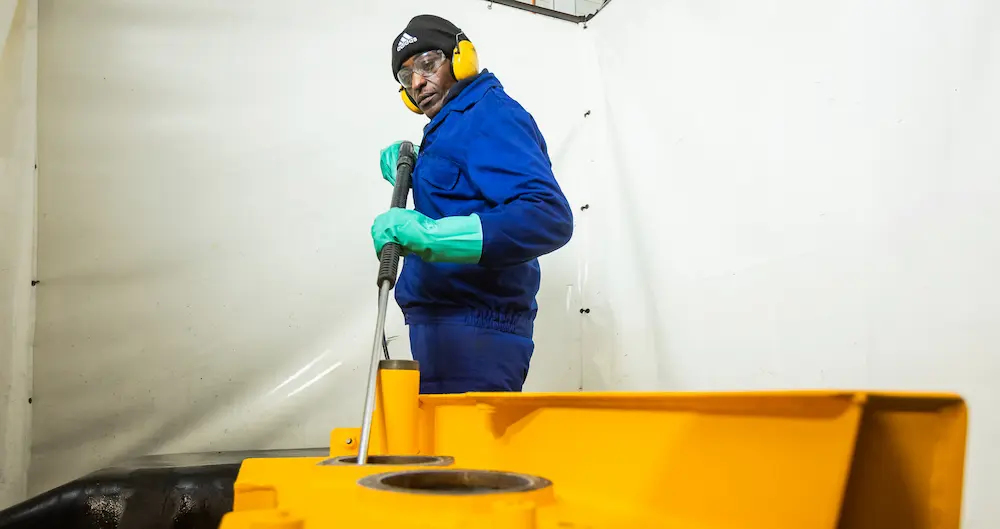
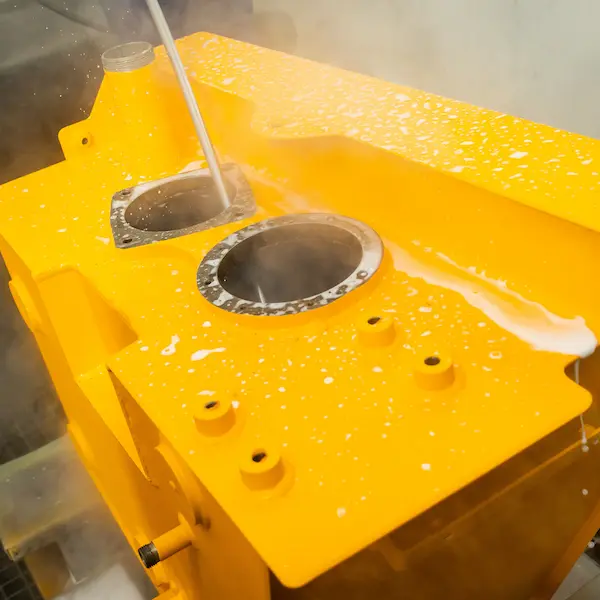
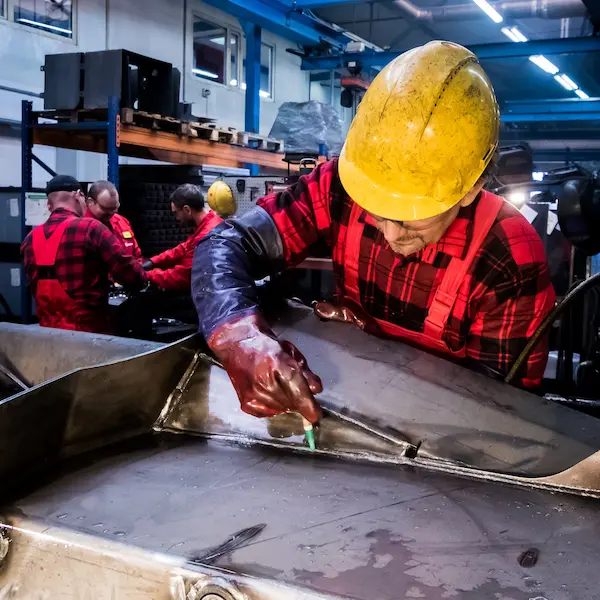
At HydraQ, we understand that the internal cleanliness of tanks is just as crucial as their structural integrity and tightness. Therefore, we offer specialized tank cleaning services that go beyond standard procedures, focusing on achieving and validating the highest cleanliness standards. Our processes are designed to remove all contaminants, ensuring optimal conditions for stored media and long-term operational efficiency.

A key element of our service is cleanliness validation in accordance with rigorous ISO 4406 and ISO 4407 standards. In our in-house laboratory, we continuously monitor and control processes related to tank cleanliness, ensuring that each component meets specified parameters. This approach guarantees not only the removal of visible contaminants but, more importantly, micro-particles that could negatively affect hydraulic systems, technological fluids, or other sensitive media. This minimizes the risk of failures, extends component lifespan, and ensures compliance with industrial standards.

By choosing HydraQ, you gain confidence that your tanks are prepared for the most demanding applications, and their internal cleanliness is confirmed by objective and accredited methods.

Why is tank cleanliness validation so important?

Cleanliness validation, especially in accordance with ISO 4406 and ISO 4407 standards, is crucial for ensuring the optimal operation of systems to which tanks are connected. Removing micro-particles and contaminants prevents failures, extends component lifespan, and guarantees the safety of stored media.

How do you monitor the cleanliness process in tanks?

We have our own advanced laboratory where we continuously monitor tank cleaning processes. We use specialized measurement techniques to ensure that the cleanliness level meets the stringent requirements of ISO 4406 and ISO 4407 standards.

What cleanliness standards do you apply?

We focus on meeting and validating cleanliness in accordance with international standards ISO 4406 (classification of particulate contamination level in hydraulic fluids) and ISO 4407 (microscopic method for determination of particulate contamination in hydraulic fluids).